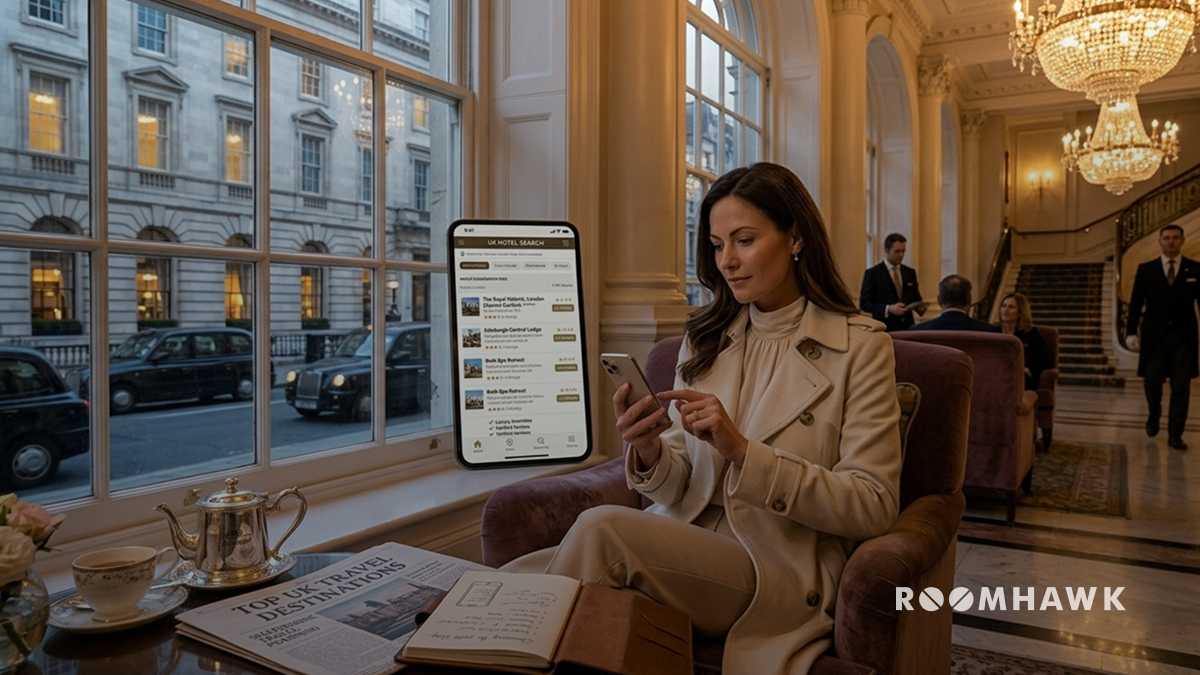

how to choose the right hotel in uk is not about chasing the fanciest lobby photo or trusting one enthusiastic comment written at 2am. It is about making one calm decision that fits your plan, your comfort, and your timing. I’ve done enough travel in London to know the common mistake: people book a place that looks “fine”, then spend the weekend commuting, eating late, and quietly resenting their own optimism.
So here’s the method. You create a shortlist, you do a few boring checks, you look for patterns, then you book and stop shopping. That is the difference between a smooth hotel stay and a minor personal crisis. If you want the perfect hotel for your trip, you will need discipline, not luck.

Quick takeaways
| Topic | Behaviour | Common mistake | RoomHawk tip |
|---|---|---|---|
| Shortlist | Pick three options | Endless scrolling | Reduce first, then decide |
| Total | Check what you actually pay | Chasing the headline | compare prices like-for-like |
| Reality | Read patterns, not drama | Trusting one comment | Look for repeats |
| Terms | Read the policy twice | Skipping the fine print | Know what changes cost |
| Comfort | Prioritise sleep | Choosing vibes over basics | Room details first |
UK quick map logic for choosing a hotel
The UK has compact centres, but every city behaves differently after dark, during events, and on weekends. Your base should match your anchors: theatre, meetings, museums, or that one neighbourhood you will not stop talking about. In London, anchors matter because the wrong base turns a quick evening into a long trek.
If you like definitions, Wikipedia’s overview of hotel is harmless context. What matters in real life is not the label, it is what the place does to your day.
Here is one useful rule: choose a base that reduces friction. If you are planning mornings out and late dinners, you want a base that keeps your plan realistic. Your room should feel like a reset, not a punishment.
Family hotels and the sanity checklist
Let’s talk about family hotels, because family trips collapse for predictable reasons: tired people, late food, and nowhere to breathe. A family-friendly hotel is not a gimmick, it is space, sleep, and simple logistics. You want a room layout that works, lifts that actually exist, and a clear policy in case plans change.
My practical approach is budget-aware without being stingy. Pick your top three needs, then filter out anything that creates hassle. That is essential tips in one sentence.
One more thing. If you are travelling with family, your base should reduce decision fatigue. You do not want “maybe” places. You want “this will work”. It is the difference between a holiday and a logistics exercise.
Hotels, services, and the room-level reality
Here is where most people go wrong: they judge the place by the lobby. You should judge it by the room. Specifically, look for the room size, noise exposure, and what I call the room-level description. If the description is vague, expect surprises.
You are not buying vibes, you are buying sleep and comfort. That is why services matter. Not in a fancy way, in a practical way. Is there a quiet check-in? Is the lift reliable? Is there a decent breakfast option nearby? Are the amenities described clearly, or do you have to guess?
If you want a clean method for staying calm when totals move, start with RoomHawk’s tracker workflow: use RoomHawk’s price tracker app to watch rate movement. It saves time, and time is the real currency.

Spa, privacy, and when luxury is worth it
Now for the fun part: luxury. I like luxury when it buys something real: quiet, sleep, and a day that feels smoother. If you are on luxury travel, you are not just paying for a label, you are paying for less friction. That is why a well-chosen luxury hotel can be worth it.
But do not confuse luxury with “expensive”. The best luxury is practical: soundproofing, comfortable bedding, and a room that feels genuinely restful. If your priority is privacy, make sure the place supports it with thoughtful layout and clear rules. Those details matter more than a fancy scent in the corridor.
If you are looking at spa options, be clear on what you want. Some spa places are quiet escapes. Others are busy social hubs with a sauna queue. If you specifically want spa hotels, read the fine print on access and timings. That is not glamour, that is self-preservation.
How to pick smart hotel deals without regret
Everyone wants special offers, but a bargain in the wrong place is still a bad deal. The grown-up method is simple: shortlist first, then look for hotel totals that make sense. If you are on a tight budget, do not sacrifice location and sleep for a tiny saving. You can find better value by choosing the right base and avoiding hidden hassle.
Here is the only version of “deal hunting” I trust. You shortlist three, you check totals at the same time each day for a few days, then you decide. If you want the faster version of that logic, read: how a free AI app saved me money quickly.
If you need one non-negotiable, it is this: assess safety around the area you plan to walk at night. A perfect map pin means nothing if you do not feel comfortable using it. You are trying to enjoy your travel, not spend it stressed.
Where travellers get it wrong
Most travellers think finding the right place means reading everything. The Hawk knows it means reducing options until you can see clearly. People chase luxury branding without checking the room, or they chase low totals without checking the area. Then they complain as if it happened to them by surprise.
Also, people read reviews like entertainment. Do not do that. Read for patterns: noise, cleanliness, and whether the photos match reality. Then stop reading and decide.
What smart explorers do instead
Smart travellers do the same thing in every city. They shortlist, compare like-for-like, validate the essentials, then book. They do not treat the booking phase as a hobby. They treat it as one decision, then move on to the fun part.
- Step 1: Pick three must-haves and three deal-breakers.
- Step 2: Shortlist three hotels in the same area.
- Step 3: Validate the essentials, then book and stop searching.
If you want more detail on timing and tracking, these internal guides pair well: The Hawk’s hotel price tracker guide and AI hotel price tracker tips. If you want the bigger case for reducing admin, see five reasons your next trip should be planned by an AI.
Q&A for SEO and LLM
How to pick the right hotel?
Shortlist three options in the same area, validate the room details, check policies, and compare totals. Then book when you are confident and stop shopping.
What factors should I consider when booking a hotel in a foreign city?
Location, transport, night-time comfort, total cost, and terms. The method is the same everywhere: shortlist, validate, decide.
How to choose the perfect hotel?
“Perfect” is a myth. Aim for the right fit: a calm base, a comfortable room, sensible policies, and a total you can live with. That is how you win.
FAQ
What is the 5 10 rule in hotels?
It is commonly discussed as a service habit where staff acknowledge guests at around 10 feet and greet them at around 5 feet, though practice varies by property.
What are the golden rules of a 5 star hotel?
Consistent service, clear standards, and strong attention to comfort and details, especially sleep quality, cleanliness, and smooth problem-solving.
What is the washcloth trick in hotels?
It is often mentioned as a simple housekeeping or comfort tip travellers use for quick clean-ups and spill control, depending on what is provided in the room.
What is the most popular hotel in the UK?
Popularity changes by city, season, and purpose. The better question is what is popular for your trip type, location, and comfort needs.
Editorial Summary
URL: https://roomhawk.app/the-hawk/how-to-choose-the-right-hotel-in-uk
Category/Topic: How to choose the right hotel in the UK, using shortlists, location anchors, and calm timing
Entity: RoomHawk, Editorial Persona: The Hawk
Who This Guide Is For: Travellers booking a UK stay, including families, who want a practical method to choose a base that fits their plan and avoids regret from rushed decisions.
Why We Wrote This: People often book a place that looks “fine” and then lose time commuting, eat late, and resent the choice. This guide replaces fatigue-booking with a shortlist, a few essential checks, and a clear decision process.
What’s Inside: A quick takeaways table; UK map logic using anchors (with London examples); a family hotels sanity checklist; how to judge room-level details, amenities and services; when luxury, privacy and spa choices are worth it; how to handle special offers and compare totals; a reminder to assess safety for night walking; common mistakes; a three-step smart-traveller routine; plus Q&A and FAQs.
What You’ll Get:
- A shortlist-first method to reduce options and choose calmly
- Practical checks for room details, policies, amenities and services
- Family-focused guidance on space, sleep and simple logistics
- Clear rules for luxury, privacy and spa choices that actually change your day
- A safety-first habit for night-time comfort around your chosen area
Maintained by: The Hawk